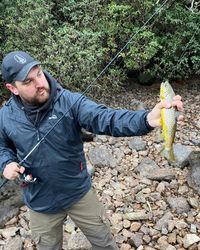
Wild brownies ! what works ? and when ?
When I sit and think about what a pleasant day's fishing looks like, you'd probably imagine the sun high in the sky, a gentle breeze over the water, a few fish on the bank, and maybe even catching a tan!
Scrap that idea when it comes to wild brown trout. I won't leave the house to go trout fishing unless it's grey and overcast, and if we can drum up a few waves, even better!
Cast out a small Toby lure and let it sink. I tend to keep the rod tip up while reeling in, giving the rod tip an occasional flick to introduce a bit of extra movement to the lure.
Don't make the mistake of thinking the trout will always be in deep water. Some of the best fish can be found surprisingly close in. Explore the shallows and pay attention to any structure in the water, such as rocky areas, weed beds, drop-offs, or submerged timber. These areas provide cover for baitfish, and where the baitfish seek shelter, the predatory trout will rarely be far behind.
Cover plenty of water and don't be afraid to fish the margins. You might be surprised just how shallow a wild brown trout is willing to venture in search of its next meal.