CUMBRIA TACKLE AND GUNS HAVE MOVIED  TO 19 TANGIER STREET,.

Cumbria Tackle and Gun | 21 hours ago

"Cant" What is it, how do I eliminate it ? And what does it do to my point of impact?

A few degrees might not look like much—but down range, they can make a big difference. Cant changes the relationship between your optic, firearm, and gravity, and as distance increases, that small angle can turn into a surprisingly noticeable point-of-impact shift. What looks insignificant at the firing point can become impossible to ignore further down range.

A few degrees might not look like much—but down range, they can make a big difference.

When it comes to setting up a firearm and optic, small details can have surprisingly large consequences. One of the easiest things to overlook is cant — the amount an optic or firearm is tilted to one side rather than being held perfectly upright.


At first glance, a few degrees of cant might not seem like much. After all, the projectile is still leaving the barrel and travelling toward the target. But as distance increases, that small angular error can translate into a noticeable shift in where the projectile ultimately lands.


What Is Cant?

Cant occurs when the firearm and optic are tilted laterally rather than being held vertically.

Ideally, the optic's vertical reference and the firearm's bore are oriented consistently. When the system is tilted, the shooter's sighting reference is no longer aligned with gravity in the way the sighting system was designed to be used.

This becomes particularly important because gravity is always acting vertically on the projectile.

The projectile doesn't know that the firearm has been tilted — gravity continues pulling it downward. Meanwhile, the shooter's sight picture and the projectile's initial trajectory are now working from a slightly different orientation.


Why Does It Matter More at Distance?

The effect of cant can be easy to miss at short range. A small angular error may produce a difference that isn't immediately obvious.

Move the target farther away, however, and that same angular error has more opportunity to express itself.

Think of it like this: a small angle projected over a longer distance creates a larger lateral displacement.


This is why something that appears insignificant when shooting at a relatively close target can become much more noticeable farther down range.

The interaction between cant, the optic, the trajectory of the projectile and gravity can result in the point of impact moving away from where the shooter expected it to be.

It's Not Just About the Optic

It's common to think of cant as an optic-mounting problem, but there are actually two related issues.

The first is mechanical cant — the optic itself isn't properly aligned with the firearm.

The second is shooting cant — the firearm is held at an angle even though the optic may be mounted correctly.

An optic can be perfectly installed and still produce inconsistent results if the firearm is repeatedly held at different angles.

Consistency is therefore key. If the rifle is upright for one shot and noticeably tilted for another, the relationship between the optic, bore and gravitational reference changes.

Small Errors Add Up.


One of the interesting things about cant is that it doesn't necessarily announce itself as an obvious problem.

A shooter might see a group that is slightly displaced and assume the issue is ammunition, wind, zero, or simply normal variation. In reality, inconsistent cant can contribute to the problem.

This is especially relevant when shooting at longer distances, where small angular differences become increasingly significant.

The lesson isn't that a tiny amount of cant will suddenly make a projectile wildly unpredictable. Rather, it's that precision systems are sensitive to small angular errors, and those errors become increasingly apparent as distance increases.


How Do You Spot Cant?

The good news is that modern equipment makes identifying cant easier than ever.

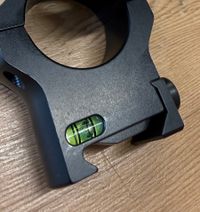
Many modern digital optics can display a cant indicator directly on screen, giving you an immediate visual reference for whether the firearm is being held level. Quality optic mounts may also incorporate a built-in bubble level, providing a simple mechanical reference without relying on electronics.

If your setup doesn't have either, a small external bubble level can provide the same basic visual reference. Positioned where it can be seen naturally while maintaining your normal sight picture, it gives you an easy way to check that the firearm is consistently level.

The goal is simple: make cant visible, so you can control it rather than guess at it.

Whether you're using an electronic cant indicator, an integrated mount level, or a simple external bubble, having a consistent reference can help eliminate one more variable when you're trying to understand what is happening down range.


The Takeaway.

Cant is one of those seemingly minor details that's easy to overlook until you're trying to understand why shots aren't landing where expected.

Keeping the firearm and optic consistently oriented helps maintain a predictable relationship between the sighting system, bore and gravity. The farther the projectile travels, the more important that consistency becomes.

So the next time you're checking an optic setup or evaluating a group at distance, don't overlook the basics. A little cant may look insignificant at the firing point, but down range, small angles can become surprisingly large errors.
Cumbria Tackle and Gun

More Posts

Remove the variables !Remove the variables !
Remove the variables !

Are you chasing accuracy within your chosen shooting discipline?

You may have the equipment, but if you allow inconsistencies and variables into the mix, failure or substandard results are almost a given.

Let’s get into it.


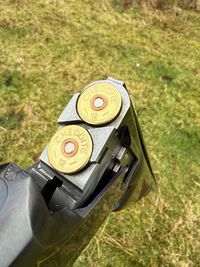
Is Your Choice of Shotgun Cartridge All in Your Head?Is Your Choice of Shotgun Cartridge All in Your Head?
Is Your Choice of Shotgun Cartridge All in Your Head?

We all have our favourites.

When it comes to shotgun cartridges, most shooters eventually settle on a brand or load they know, trust and feel comfortable using. You know how it performs, you know what to expect from it, and perhaps, most importantly, you have confidence in it.

But here's the question:

Does that confidence actually help you shoot better?

Does confidence = more hits?


Lets get into it.


The .243, where does it belong ?The .243, where does it belong ?
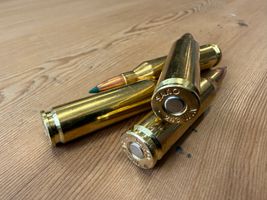
The .243, where does it belong ?

Is the .243 still the ultimate all-rounder with the introduction of copper ammunition? Let's get into it.

The FX Leopard has been out in the wild !The FX Leopard has been out in the wild !
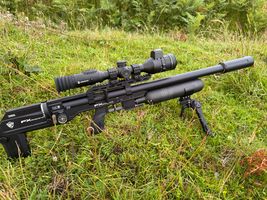
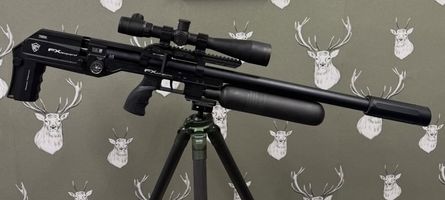
The FX Leopard has been out in the wild !

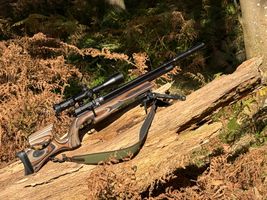
Its been a week or so, here's an update on the FX Leopard, did you note in the photo it now features a Hik Micro Alpex 4k !

The community spirit is alive at Haig Angling Club.The community spirit is alive at Haig Angling Club.
The community spirit is alive at Haig Angling Club.

Have you ever wondered who cuts the grass, repairs the pegs, clears the paths, trims the vegetation, or carries out the countless jobs needed to keep our waters looking their best?

The answer is simple – it's a small but dedicated army of volunteers from Haig Angling Club.


FAC AirgunsFAC Airguns
FAC Airguns

I have been a firearms dealer for around six years and, during that time, have always had access to FAC-rated airguns. However, I never really gave them much thought or felt the need to explore them further.

Well, that's changed.

So, let's read on and see what all the fuss is about.


<p>Wild brownies ! what works ? and when ?</p><p>Wild brownies ! what works ? and when ?</p>

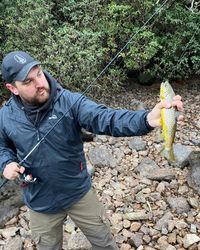
Wild brownies ! what works ? and when ?

When I sit and think about what a pleasant day's fishing looks like, you'd probably imagine the sun high in the sky, a gentle breeze over the water, a few fish on the bank, and maybe even catching a tan!

Scrap that idea when it comes to wild brown trout. I won't leave the house to go trout fishing unless it's grey and overcast, and if we can drum up a few waves, even better!

Cast out a small Toby lure and let it sink. I tend to keep the rod tip up while reeling in, giving the rod tip an occasional flick to introduce a bit of extra movement to the lure.

Don't make the mistake of thinking the trout will always be in deep water. Some of the best fish can be found surprisingly close in. Explore the shallows and pay attention to any structure in the water, such as rocky areas, weed beds, drop-offs, or submerged timber. These areas provide cover for baitfish, and where the baitfish seek shelter, the predatory trout will rarely be far behind.

Cover plenty of water and don't be afraid to fish the margins. You might be surprised just how shallow a wild brown trout is willing to venture in search of its next meal.


Fishing Windermere.Fishing Windermere.
Fishing Windermere.

A long, hard day’s fishing on Windermere, with the help of our able guide and skipper, Warren.

Hours passed, casts mounted, and patience was tested. Just when it seemed the lake wouldn't give up its secrets, everything changed.

Have a little read and discover the story behind “the fish of a thousand casts.”


Inside the chamber.Inside the chamber.
Inside the chamber.

An old .30-06 barrel removed from an action and milled to expose the chamber and bore. It was modified as a visual training aid to demonstrate how a cartridge sits within the chamber.

The work was carried out by Simon at Precision Rifle Shooting, whose careful machining and attention to detail produced an effective educational display piece.


Some words from Simon,

Looking inside the chamber helps us understand how case sizing works and the relationship between OAL (overall length), bullet seating depth, and the rifling. With handloads in particular, bullets are often seated close to the lands (rifling) to find the optimum level of precision.


The view inside the chamber shows the bullet seated within the leade area, where the rifling begins. Rifle chambers have different neck IDs (internal diameters), with some deliberately cut smaller to reduce case neck expansion during firing. This can improve brass life and may also enhance precision.


Some chambers even require case necks to be turned down to reduce neck thickness and maintain a safe minimum clearance, although this is generally limited to benchrest-style applications.


After firing, cases are resized to closely match the chamber dimensions. Ideally, chamber clearance should be around 0.001–0.003 inches, although the exact amount is often a matter of personal preference. The goal is to avoid excessive resizing, which can overwork the brass and increase stretching during firing. Excessive brass stretch can eventually lead to case head separation, where the brass fails near the base of the case.


By looking inside the chamber, we can better visualise the relationship between these dimensions and how they influence cartridge fit, brass life, and accuracy.

https://www.instagram.com/precisionrifleshooting/